Saturday, November 30, 2013

Lesany Military Museum - Czech Republic


During August I managed to get out of Prague for the day and drive down to the Czech Army Military museum in Lesany (about 50 KM south of Prague). The museum houses a large collection of tanks and artillery from around the world, especially WW2 German and Soviet tanks and artillery. Above you can see the famous "Pink Tank". This was on a Soviet War memorial in the centre of Prague, and a couple of years after the Revolution was repainted pink by the Czech protest artist David Cerny (the tank was on a 1945 liberation memorial, and it was a play on how the Soviets went on to "Liberate", and then occupy the country after 1968). The Russian Embassy was outraged and protested, so finally the tank was moved to the museum. 

The museum really does have a huge collection of interwar, WW2 and cold war tanks (especially British equipment used by the Free Czechoslovak Army in WW2). They also keep a large number of them in running order and put on exhibitions of them driving around the training grounds in the summer. I will just list the tanks below against pictures and some commentary. I highly recommend this for a day trip from Prague.

There are many unusual tanks as well such as this US M36 above. WW2 vintage, it was sold to the Yugoslavs in the 1950's, and was then later used in the Yugoslav civil war by the Slovenes. Finally it was sold to the Czechs for the museum.

Above, an original 88cm German flak gun (the terror of many an allied tank man).
A Bofors flak gun.

Austrian WW1 10cm 1910 mountain gun (from the Italian front).


Above the funeral carriage of T.G. Masaryk, the first President of Czechoslovakia
Another 10cm Austrian Mountain gun from WW1


The 1933 Skoda MU - 4 interwar tankette (it really is the size of an armoured mini). Below you can see the Czech designed AH-IV tankette, which was used by the Romanian, Swedish and Iranian Armies in WW2. The one in the photos is the Swedish version.


Below, the famous Czech LT- 38 (used in large numbers by the German Army at the start of WW2). This was an extremely reliable light tank, and in terms of engineering and mechanics, far superior to anything the Germans were producing at this time, certainly much better than the Panzer I and II tanks. It saw extensive action during the invasions of Poland, France and the Low Countries.
The chassis continued to be used throughout WW2 in the production of Marders and Jagdpanzers.

Below, a Jagdpanger (38) Hetzer, based on the Czech LT-38 Chassis.

Below an exhibition of original soft-skinned vehicles used by the Czechs in North Africa in WW2 (note the plastic egg on the bonnet of the first one).


Original Soviet SU-76 self propelled cannon from WW2


Below a Soviet ISU 152
Original WW2 "Katusha" rocket launcher (on a US Studebaker). A terrifying weapon for anybody on the receiving end. Here's the song that goes with it: "Katusha"

Another M36 Jackson

Sherman M4A1 Tank


Cromwell IV from the Free Czechoslovak Army that landed at Normandy

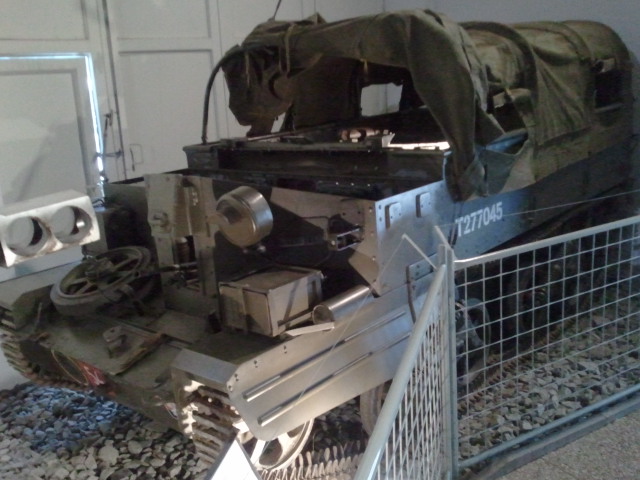
Windsor Carrier Mk.I
Morris C8 Quad used by the Free Czechoslovak Army in France


British WW2 Comet tank


Skoda MOZ 2 amphibious jeep


Ferret Mk2


Saracen APC

US Patton tank
Leopard 1

Centurion Tank

Israeli Merkeva MK-1 tank


Chieftain tank

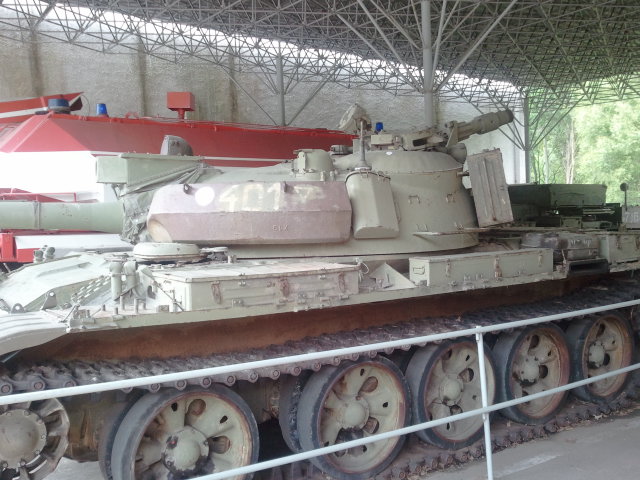
Czechoslovak Army T-72 medium tank
Czechoslovak Army T-52 AM2 medium tank


Soviet 122mm Self propelled gun


T-55


T-54A

Half built Hetzers that were used by Czechs during the Prague uprising against the Germans in 1945.


Soviet IS-3 heavy tank


Original Soviet T34/85 from WW2


T-34/76 version 1942/43 used by the Polish Army fighting with the Soviets, and was used by the 1st Polish Tank Corps in the liberation of Prague.

Czechoslovak Army T34
Picture showing the cramped interior cabin of a T34/85 (viewed from the bottom of the tank)


Friday, November 29, 2013

Getting ready for the Analogue Hobbies challenge

I thought I'd just post a quick update on the priming orgy that's going on in Wilde Goose Mansions at the moment. A nice rule, that is, in the challenge, where all the figures can be prepped and primed before the painting onslaught begins on 15th December.  Prepping is a chore at the best of times, so it's good that this can be dealt with beforehand, and not spoil the painting mojo.
I have put myself down for 1000 points which works out at about 200 x 28mm figures. Now as part of our project to run a small Battle of Austerlitz scenario, I already have about 6 battalions of Austrians and 12 battalions of French (plus artillery) to paint up, so this would easily get me over my quota.

Into the mix I've thrown a side project of late WW1 Brits and Germans, which I'd also like to get finished. I also have quite a lot of the Orinoco Miniatures figures primed, but I aim to paint some of these up before the competition (for marketing purposes), the rest will be painted during the competition.

Now I've been fiddling around for a few months trying to find a decent approach to taking photos of miniatures at home. Needless to say, I am not happy with the results of my efforts. So below is an experimental purchase that I hope will allow my figures to see the light of a decent photograph, and be used for all the painting challenge submissions... wish me luck.


Friday, November 22, 2013

Remembering JFK - Triumph before tragedy

50 year's on and so much has been written about the tragic assassination of one of America's most charismatic presidents that it does not need to repeated here.
Perhaps a happier, though overshadowed, memory was of his triumphal "homecoming" to Ireland in the summer before the fateful events in Dallas. Kennedy as the great grandchild of Irish immigrants received a tumultuous reception from the crowds that turned out to greet their "returned son". The imagery and importance of his visit for Irish people should not be underestimated. Certainly it left a strong impression on my young parents when they saw him in Cork (picture below of JFK motorcade in St.Patrick's Street).

So there was great joy throughout the country, and perhaps some joy for JFK as well before the dark clouds of November.
I will leave it with JFK's own words, from a short excerpt of his speech to the Oireachtas (both houses of the Irish Parliament):

I am grateful for your welcome and for that of your countrymen.
The 13th day of December, 1862, will be a day long remembered in American history. At Fredericksburg, Va., thousands of men fought and died on one of the bloodiest battlefields of the American Civil War. One of the most brilliant stories of that day was written by a band of 1200 men who went into battle wearing a green sprig in their hats. They bore a proud heritage and a special courage, given to those who had long fought for the cause of freedom. I am referring, of course, to the Irish Brigade. General Robert E. Lee, the great military leader of the Southern Confederate forces, said of this group of men after the battle, "The gallant stand which this bold brigade made on the heights of Fredericksburg is well known. Never were men so brave. They ennobled their race by their splendid gallantry on that desperate occasion. Their brilliant though hopeless assaults on our lines excited the hearty applause of our officers and soldiers."
Of the 1200 men who took part in that assault, 280 survived the battle...... In the fall of 1862, after serving with distinction and gallantry in some of the toughest fighting of this most bloody struggle, the Irish Brigade was presented with a new set of flags...... Today, in recognition of what these gallant Irishmen and what millions of other Irish have done for my country, and through the generosity of the "Fighting 69th," I would like to present one of these flags to the people of Ireland...
I am proud to be the first American President to visit Ireland during his term of office, proud to be addressing this distinguished assembly, and proud of the welcome you have given me. My presence and your welcome, however, only symbolize the many and the enduring links which have bound the Irish and the Americans since the earliest days....