Saturday, November 30, 2013

Lesany Military Museum - Czech Republic


During August I managed to get out of Prague for the day and drive down to the Czech Army Military museum in Lesany (about 50 KM south of Prague). The museum houses a large collection of tanks and artillery from around the world, especially WW2 German and Soviet tanks and artillery. Above you can see the famous "Pink Tank". This was on a Soviet War memorial in the centre of Prague, and a couple of years after the Revolution was repainted pink by the Czech protest artist David Cerny (the tank was on a 1945 liberation memorial, and it was a play on how the Soviets went on to "Liberate", and then occupy the country after 1968). The Russian Embassy was outraged and protested, so finally the tank was moved to the museum. 

The museum really does have a huge collection of interwar, WW2 and cold war tanks (especially British equipment used by the Free Czechoslovak Army in WW2). They also keep a large number of them in running order and put on exhibitions of them driving around the training grounds in the summer. I will just list the tanks below against pictures and some commentary. I highly recommend this for a day trip from Prague.

There are many unusual tanks as well such as this US M36 above. WW2 vintage, it was sold to the Yugoslavs in the 1950's, and was then later used in the Yugoslav civil war by the Slovenes. Finally it was sold to the Czechs for the museum.

Above, an original 88cm German flak gun (the terror of many an allied tank man).
A Bofors flak gun.

Austrian WW1 10cm 1910 mountain gun (from the Italian front).


Above the funeral carriage of T.G. Masaryk, the first President of Czechoslovakia
Another 10cm Austrian Mountain gun from WW1


The 1933 Skoda MU - 4 interwar tankette (it really is the size of an armoured mini). Below you can see the Czech designed AH-IV tankette, which was used by the Romanian, Swedish and Iranian Armies in WW2. The one in the photos is the Swedish version.


Below, the famous Czech LT- 38 (used in large numbers by the German Army at the start of WW2). This was an extremely reliable light tank, and in terms of engineering and mechanics, far superior to anything the Germans were producing at this time, certainly much better than the Panzer I and II tanks. It saw extensive action during the invasions of Poland, France and the Low Countries.
The chassis continued to be used throughout WW2 in the production of Marders and Jagdpanzers.

Below, a Jagdpanger (38) Hetzer, based on the Czech LT-38 Chassis.

Below an exhibition of original soft-skinned vehicles used by the Czechs in North Africa in WW2 (note the plastic egg on the bonnet of the first one).


Original Soviet SU-76 self propelled cannon from WW2


Below a Soviet ISU 152
Original WW2 "Katusha" rocket launcher (on a US Studebaker). A terrifying weapon for anybody on the receiving end. Here's the song that goes with it: "Katusha"

Another M36 Jackson

Sherman M4A1 Tank


Cromwell IV from the Free Czechoslovak Army that landed at Normandy

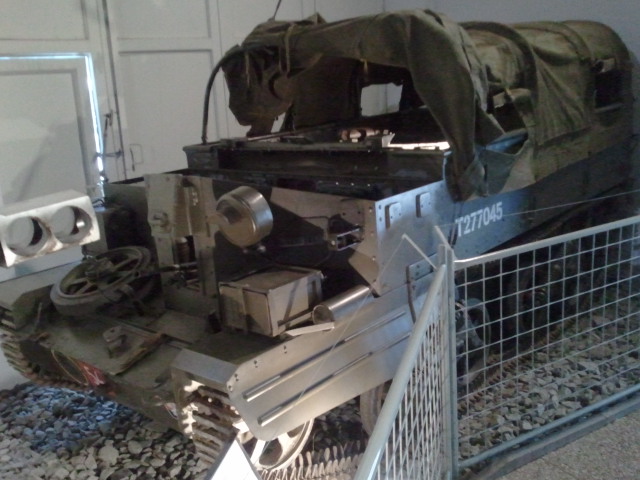
Windsor Carrier Mk.I
Morris C8 Quad used by the Free Czechoslovak Army in France


British WW2 Comet tank


Skoda MOZ 2 amphibious jeep


Ferret Mk2


Saracen APC

US Patton tank
Leopard 1

Centurion Tank

Israeli Merkeva MK-1 tank


Chieftain tank

Czechoslovak Army T-72 medium tank
Czechoslovak Army T-52 AM2 medium tank


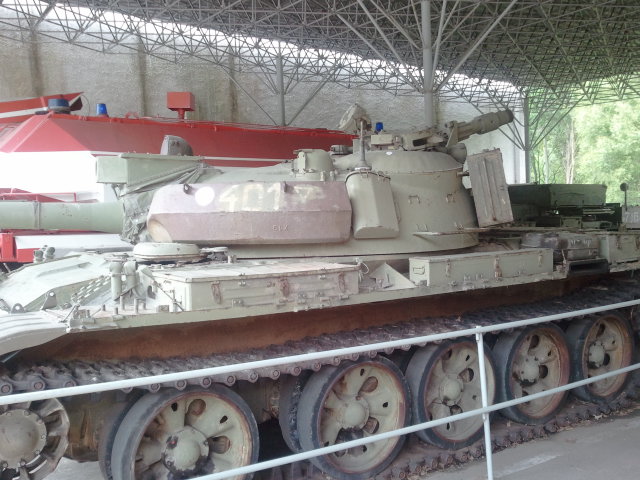
Soviet 122mm Self propelled gun


T-55


T-54A

Half built Hetzers that were used by Czechs during the Prague uprising against the Germans in 1945.


Soviet IS-3 heavy tank


Original Soviet T34/85 from WW2


T-34/76 version 1942/43 used by the Polish Army fighting with the Soviets, and was used by the 1st Polish Tank Corps in the liberation of Prague.

Czechoslovak Army T34
Picture showing the cramped interior cabin of a T34/85 (viewed from the bottom of the tank)


Friday, November 29, 2013

Getting ready for the Analogue Hobbies challenge

I thought I'd just post a quick update on the priming orgy that's going on in Wilde Goose Mansions at the moment. A nice rule, that is, in the challenge, where all the figures can be prepped and primed before the painting onslaught begins on 15th December.  Prepping is a chore at the best of times, so it's good that this can be dealt with beforehand, and not spoil the painting mojo.
I have put myself down for 1000 points which works out at about 200 x 28mm figures. Now as part of our project to run a small Battle of Austerlitz scenario, I already have about 6 battalions of Austrians and 12 battalions of French (plus artillery) to paint up, so this would easily get me over my quota.

Into the mix I've thrown a side project of late WW1 Brits and Germans, which I'd also like to get finished. I also have quite a lot of the Orinoco Miniatures figures primed, but I aim to paint some of these up before the competition (for marketing purposes), the rest will be painted during the competition.

Now I've been fiddling around for a few months trying to find a decent approach to taking photos of miniatures at home. Needless to say, I am not happy with the results of my efforts. So below is an experimental purchase that I hope will allow my figures to see the light of a decent photograph, and be used for all the painting challenge submissions... wish me luck.


Friday, November 22, 2013

Remembering JFK - Triumph before tragedy

50 year's on and so much has been written about the tragic assassination of one of America's most charismatic presidents that it does not need to repeated here.
Perhaps a happier, though overshadowed, memory was of his triumphal "homecoming" to Ireland in the summer before the fateful events in Dallas. Kennedy as the great grandchild of Irish immigrants received a tumultuous reception from the crowds that turned out to greet their "returned son". The imagery and importance of his visit for Irish people should not be underestimated. Certainly it left a strong impression on my young parents when they saw him in Cork (picture below of JFK motorcade in St.Patrick's Street).

So there was great joy throughout the country, and perhaps some joy for JFK as well before the dark clouds of November.
I will leave it with JFK's own words, from a short excerpt of his speech to the Oireachtas (both houses of the Irish Parliament):

I am grateful for your welcome and for that of your countrymen.
The 13th day of December, 1862, will be a day long remembered in American history. At Fredericksburg, Va., thousands of men fought and died on one of the bloodiest battlefields of the American Civil War. One of the most brilliant stories of that day was written by a band of 1200 men who went into battle wearing a green sprig in their hats. They bore a proud heritage and a special courage, given to those who had long fought for the cause of freedom. I am referring, of course, to the Irish Brigade. General Robert E. Lee, the great military leader of the Southern Confederate forces, said of this group of men after the battle, "The gallant stand which this bold brigade made on the heights of Fredericksburg is well known. Never were men so brave. They ennobled their race by their splendid gallantry on that desperate occasion. Their brilliant though hopeless assaults on our lines excited the hearty applause of our officers and soldiers."
Of the 1200 men who took part in that assault, 280 survived the battle...... In the fall of 1862, after serving with distinction and gallantry in some of the toughest fighting of this most bloody struggle, the Irish Brigade was presented with a new set of flags...... Today, in recognition of what these gallant Irishmen and what millions of other Irish have done for my country, and through the generosity of the "Fighting 69th," I would like to present one of these flags to the people of Ireland...
I am proud to be the first American President to visit Ireland during his term of office, proud to be addressing this distinguished assembly, and proud of the welcome you have given me. My presence and your welcome, however, only symbolize the many and the enduring links which have bound the Irish and the Americans since the earliest days....
 

Thursday, November 21, 2013

The Fourth Annual Analogue Hobbies Painting Challenge

After watching this challenge run for a couple of years as a mere spectator, I decided to take the plunge this year and join in the fun. I'm a slow painter most of the time, which isn't helped by a move away from 15mm to 28mm a few years back. Nevertheless, I feel the challenge will light the fire under many a posterior, my own included, and help shift some lead off the mountain.
The theme this year is great, and has already given me some ideas for the bonus themes, which are also a novel touch. I have a number of projects that have been moving along at a snail's pace, especially the 28mm Austerlitz Project, which myself and a friend are painting up. At least he has the excuse of trying to finish a PhD, but for my part it is pure painting lethargy. So there is a very large pile of French and Austrian 1805 infantry that I picked up at Salute awaiting my attention.

It's also got me moving again on my late war WW1 project (with lots of lovely Great War Miniatures still going unpainted). I glued the British below to their bases last night, and now they just need a lick of primer to be ready for the start on 15th December.
Obviously, it'll also be a chance to paint up some of my new Orinoco Miniatures  Gran Colombians (which I'd like to use for a South American Wars of Independence demonstration game at some show next year)

 
I've set my target at 1000 points, perhaps I'll even make it. Anyway, good luck to all the other painters

Tuesday, November 12, 2013

2nd game of Dux Britanniarum (with less testing and more playing)

We managed to roll out the muddy golf course that are our current gaming tiles at the Prague Wargames Club for another tale of daring-do's (and sometimes don't's), with a very bloody maul of a Saxon raid on a Romano-British church (no the lads above are not queuing up for confession).
This was the second raid in our new campaign. The Saxons received a bloody nose during their last raid on a Romano-British village. As a result they spent two months nursing their wounds and rebuilding their force. In the meantime the British Lord had lifted enough money (filty lucre) off the Saxons to be able to bribe his warriors to declare him Praefectum (a higher rank on the road to kingship).

The Saxons, still short of cash need to continue raiding until their Warlord has enough money to bribe his way up the social ladder. Only then will he have enough prestige (and cash) to attempt full battle with the British and try to seize a provice, and eventually a kingdom (the Saxons above starting the raid; their target the church in the distance).
Now the Saxons were staring with a -1 to Army morale as they had lost the last raid. They were lucky and got four turns of moves before the British could enter the table. Once at the church they had to pass two looting tests to find the gold. But could they? No, they passed one test (a 5 or 6 on a normal die) and then failed every other one, and sat for the whole game stuck in the church trying to sniff out that last golden chalice.
With all the dithering at the church, there was nothing for it but for the Saxons to get stuck in to the British vanguard to give the boys at the church more time to find the loot and then leg it off the table. (Saxon Hearthguard charging towards the British, followed by the Saxon warriors).
The two elites Saxon units, with Saxon Warlord and champion attached, ploughed into the British Hearthguard, and bounced off! The British played the Shieldwall braced card from the Fate Deck, and the Saxons the Aggressive charge card, which cancelled each out.
The Saxons reeled backwards after a poor dice roll and losing nearly half their men. They were then hit immediately by a fresh group of British Warriors; more casualties (9 now out a total of 12) and then a stack of Shock Points. This added up to more than twice the number of remaining men, and so the two Saxon units routed automatically (Losing ones Amphora). The remainder of the Saxon elite routing off the table below.

The next effect of this mess was that the Saxons had to take an army morale test as two elite units had routed. This led to Saxon army morale being halved (get to 0 morale and the whole army routs off the table).


Dead from the elite Saxon units loitering somewhere in Elysium, or is that Valhalla.


The British tide of units kept coming on as the raiding party was still fumbling with the Vicar's drawers in the church. There was nothing for it but for a combined group of two Saxon Warrior units to charge into the British to delay or hopefully rout some of their opponents.
 
They piled into the British Elite unit and smashed them, but in doing so sustained huge causalities and shock points in turn. The British broke first, but it was a Pyrrhic victory, as the excess shock points then routed both Saxon units. (the result of the final bloody encounter below).
Below, the Saxons still messing around in the church, as the Saxons square up for their final charge.
With the two units of Saxon warriors running for the hills, the Saxon Army morale fell to 0, and it was game (or raid) over.


Again, like the first game, everything ran very smoothly with these rules. The Saxons now have their tails firmly between their legs and must sit out another two months while they recover from their losses.  They can raid again in July, but the campaigning season finishes in September, so they really need a successful raid soon. The next raid will also see them start on a -2 to morale after this defeat. What will it be? hit a wagon train, rustle some sheep, or torch a watchtower. More Lardie mayhem to follow soon with this excellent set of rules. (All figures and buildings by Gripping Beast)

Monday, November 11, 2013

They have no other grave than the sea.


Remembrance day rolls around again, and each year we pull closer to all those centenaries. That said, the war was always a background presence in our family due to my great grandfather and his son, my granduncle, both being killed. Another granduncle survived the Somme, but apparently never fully recovered from the experience.

Again, I have no time for the pomp that seems to increasingly surround this day, so I remember those unfortunates who lost their lives or whose lives were changed forever, by all wars, on all sides. Specifically today at a more personal level I will remember by granduncle Richard Francis Coakley.

His entry in the Mercantile Marine memorial book reads:
"Fireman and Trimmer Richard Francis Coakley. S.S. Antonio (London). Drowned as a result of an attack by an enemy submarine, or killed by a mine, 7th March 1917. Age 18."

The S.S. Antonio was on her way from Barry to Cherbourg with a cargo of hay for the army horses in France. It was 7 miles out of Dartmouth when it was sunk by a mine laid by German U-Boat UC-17. The ship went down with all hands. This was at the beginning of the great U-Boat offensive that carried on throughout 1917.


He has no grave, so his name is inscribed on the Merchant Marine Memorial at Tower Hill in London. Apart from that, all we have left is his posthumous Service Medal below.


The U-Boat UC-17 was commanded by Kapitänleutnant Ralph Wenninger (picture below) in 1917, and was part of the Flandern Flotilla. It was one of the most successful U-Boats of WW1, sinking a total of 96 ships. UC-17 and her crew survived the war, and surrendered on 26th November 1918. She was Broken up in Preston the following year.

Ralph Wenninger then commanded another U-Boat in 1918, and survived with just a handful of his crew when their boat (UB 55) was sunk by a mine in Dover. He was awarded the Pour le Mérite (the Blue Max) just before the sinking. He stayed in the German Navy after the war, and then joined the Luftwaffe in 1935. He was killed in Italy on 13th March 1945. Another grave and another loss to a family.

The epitaph on the Merchant Seaman's Memorial sums up all that needs to be said: 
TO THE GLORY OF GOD AND TO THE HONOUR OF
TWELVE THOUSAND OF THE MERCHANT NAVY AND FISHING FLEETS
WHO HAVE NO GRAVE BUT THE SEA